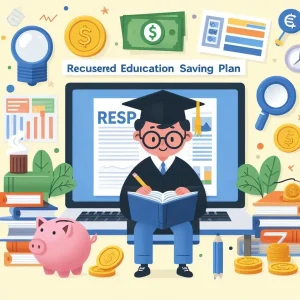
Registered Education Savings Plan (RESP)
With the rising cost of education, planning for your child’s future is more important than ever. A Registered Education Savings Plan (RESP) is a powerful investment tool the Canadian government created to help families like yours save for their children’s post-secondary education. This comprehensive guide will delve into the intricacies of RESPs, empowering you to make informed decisions about your child’s educational journey.
What is an RESP?
An RESP is a tax-sheltered savings account specifically created to fund a child’s education after high school. Contributions made to an RESP grow tax-free until withdrawn. Additionally, the government of Canada offers generous incentives, such as the Canada Education Savings Grant (CESG), to help boost your savings.
Benefits of an RESP
- Tax-Deferred Growth: Your investments within an RESP accumulate without attracting taxes, allowing your savings to grow faster.
- Canada Education Savings Grant (CESG): The government matches 20% of your annual RESP contributions up to a maximum of $500 per year per child, with a lifetime limit of $7,200 per child.
- Provincial Incentives: Some provinces offer additional grants or bonds to supplement your RESP savings.
- Flexibility: RESP funds can be used for various post-secondary expenses, including tuition, books, living expenses, and more.
- Transferability: If the beneficiary doesn’t pursue post-secondary education, you may be able to transfer the funds to a sibling’s RESP or use them for your own retirement savings under certain conditions.
Types of RESPs
- Individual Plans: Designed for a single beneficiary, typically a child or grandchild.
- Family Plans: Allows you to name multiple beneficiaries, as long as they are related to you by blood or adoption. This plan provides flexibility if you have more than one child.
- Group Plans (Scholarship Trusts): These plans pool contributions from multiple investors. Group plans often have higher fees and less investment flexibility compared to individual or family RESPs.
Who Can Open an RESP?
Anyone can open an RESP for a child – parents, grandparents, other relatives, or even friends. You will need the child’s Social Insurance Number (SIN) to open the account.
How RESPs Work
- Choose a Financial Institution: Select a bank, credit union, or investment firm (known as the RESP promoter) to open your RESP account.
- Make Contributions: You can contribute any amount to an RESP, up to the lifetime limit of $50,000 per beneficiary. There is no minimum annual contribution requirement.
- Investment Growth: Your RESP contributions are invested in various options such as stocks, bonds, mutual funds, or GICs, allowing the money to grow tax-free.
- Government Grants: The government will add the CESG directly to your RESP account, based on your contributions.
- Withdrawals for Education: When your child enrolls in a post-secondary program, funds can be withdrawn from the RESP to pay for their educational expenses.
Withdrawal Rules and Using RESP Funds
Withdrawals from an RESP consist of two main components:
-
-
Post-Secondary Education Payments (PSEs): The student receives these payments, consisting of your accumulated income and government grants. The student pays tax on these payments, likely at a lower tax rate.
-
Educational Assistance Payments (EAPs): These payments represent your original contributions, and you can withdraw them tax-free.
-
RESPs fund various post-secondary education options, including:
- University
- College
- Trade school
- Apprenticeship program
- CEGEP (in Quebec)
-
What Happens to Unused RESP Funds?
Several options exist if the beneficiary decides not to pursue post-secondary education:
- Transfer to a Sibling: Transfer the funds to another sibling’s RESP, provided they are under 21 years old.
- Contribute to Your RRSP: Transfer up to $50,000 into your own Registered Retirement Savings Plan (RRSP), if you have contribution room.
- Withdraw Your Contributions: You can withdraw your original contributions tax-free. Accumulated investment earnings and grants must be returned to the government or may be subject to taxes and penalties, depending on your chosen option.
Are RESP contributions a deduction?
No, RESP contributions are not tax deductible. Unlike contributions to a Registered Retirement Savings Plan (RRSP), you cannot deduct RESP contributions from your income tax to lower your taxable income.
However, there are still significant tax advantages to using an RESP:
-
Tax-sheltered Growth: Investment earnings within the RESP grow tax-free. This allows your money to compound faster over time compared to a regular savings account.
-
Government Grants: The Canada Education Savings Grant (CESG) and other potential provincial grants provide a significant boost to your child’s RESP savings, without incurring any taxes.
-
Focusing on the system: The tax system minimizes overall tax implications for students by taxing Educational Assistance Payment (EAP) withdrawals within their lower tax bracket

